What is a substance? What is substance misuse?
Drugs are substances which can cause a change in your body when you take them. Some drugs such as medicines can help you feel better, there are also lots of illegal drugs that can have a negative effect on your physical and mental wellbeing.
There are lots of different reasons why people might take drugs or drink alcohol. It might be:
- to fit in with a group
- to see what it feels like, experimentation.
- because they feel like they should if everyone is, or they feel pressured to do it by others
- to distract from difficult thoughts or feelings, or to try to make these feelings go away. Escape!
- to feel more confident or able to talk to people
Substance misuse is the use of alcohol, illegal drugs, or over-the-counter or prescription medications in a way that they are not meant to be used and could be harmful to you or others around you. People can misuse substances one time, occasionally, or regularly, and they can go on to develop substance use disorder / addiction.
Addiction
It can be hard to recognise when you have a problem with alcohol or drugs, as it can develop over time without you noticing. Below are some common signs that you might have a problem with drugs or alcohol.
- You feel like your drug or alcohol use is no longer under your control, and that you cannot cope without it – you “need” to do it, even if you don’t want to.
- You build up a tolerance to the drug, meaning you might start to need more and more of it in order to feel the effects of it.
- You get withdrawal symptoms when you don’t take it. For example, you might feel sick, anxious or develop shakes.
- You often have unexplained cuts and bruises, blackouts, confusion and difficulty remembering what happened while drinking or on drugs.
- You are showing risky behaviours whilst under the influence.
- You are feeling secretive and ashamed about what you are doing, or doing it in private or on your own.
Psychological symptoms of addictions:
- Mood swings
- Increased temper
- Tiredness
- Paranoia
- Defensiveness
- Agitation
- Inability to focus or concentrate
- Poor judgement
The effects of Drugs & Alcohol
Drugs and alcohol can affect your mental health in many different ways. The effect they might have on you can depend on things, such as:
- the drug you take
- how much you take
- how frequently you take it
- how you’re feeling at the time
- the environment you take it in
Short term Effects
In the short term, while you’re still feeling the effects of drinking alcohol or taking drugs, you may feel:
- happy
- excited
- energetic
- relaxed
- sociable, or like it’s easier to talk to people
- tired
- sad
- anxious
- paranoid
- impulsive, or less worried about doing things you wouldn’t do normally be worried about
- out of control
Even once the alcohol or drug wears off, it can still have an effect on your mental health. You may find that you feel:
- sad
- anxious
- tired
- paranoid
- spaced out
As some drugs such as alcohol make you feel more relaxed, outgoing and sociable, some people use them to help with anxiety in the short term. While this may help reduce feelings of anxiety in the moment, it can have negative long-term effects. For example, you may find that you start to feel as though you “need it” to cope in these situations in future; it may make feelings of anxiety or depression worse once the effects have worn off; or it may make you physically ill.
If you are struggling with anxiety, it is important to get help so that you can develop coping mechanisms that work for you in both the short term and the long term. For help with anxiety, please visit one of the following websites: YoungMinds, The Mix and Healthy Sandwell.
Long Term Effects
Uppers and Downers – Drugs go by a variety of different names including their generic name, brand name, and street names. “Uppers” and “downers” are informal drug classifications used to describe how a drug affects the central nervous system. “Uppers” are what’s known as stimulants while “downers” are what is classified as depressants.
What substances do young people use?
- Cannabis – some nicknames are known as; Weed, skunk, Ganja, Draw, Bud, Budha (CLASS B DRUG)
- Cocaine – some nicknames are known as; Cock, Charlie, White, sniff, Snow, Blow, toot, Columbian (CLASS A DRUG)
- Amphetamine – some nicknames are known as; Speed, Whizz, Billy (CLASS B DRUG)
- Magic Mushrooms – Shrooms, Mushies (CLASS A DRUG)
- Steroids – Roids (CLASS C DRUG)
- E-cigarette – Vapes, puff, cloud
- Tobacco – Fags, cigarettes, ciggies, fakes, burns, baccy
- Ketamine – K, Special K, vitamin K (CLASS B DRUG)
- LSD – Acid, tabs, microdots (CLASS A DRUG)
- Ecstasy (MDMA) – E’s, XTC, disco biscuits (CLASS A DRUG)
- Alcohol – Booze, bevy, loopy juice, poison
Drugs & the Law
Some drugs are legal, and some are not. Illegal drugs are given by a class system under the misuse of drugs Act.
Possession ( when you have drugs on your person or can be proved belongs to you, that is judged to b no bigger quantity for your own personal use).
Class A – Max of 7 years in prison
Class B – Max of 5 years in prison
Class C – Max of 2 years in prison
Supply (when you pass on drugs. You DO NOT have to receive money) /intent to supply ( when you have an amount of drugs on your person that can be proved belongs to you and that is judged to be a quantity that is more than just for personal use, or is believed that you are intending to supply to others).
Class A – Max is life in prison
Class B – Max of 14 years in prison
Class C – Max of 14 years in prison
Drug trafficking / County Lines
Taking drugs from one place to another is called drug trafficking.
Drug trafficking is a major source of money for organised crime groups. Many are involved in other forms of serious crime such as firearms, modern slavery and immigration crime.
County Lines
You may of heard of something called county lines. This was given its name due to criminal activity in which drug dealers in major cities establish networks for the supply and sale of drugs to users in towns and rural areas, using other people (typically those who are young or otherwise vulnerable) to carry, store, and sell the drugs for them. Urban street gangs play a key in this.
County Lines are not defined by the distance the drugs are carried, but rather the how the method of supply is supported; namely the use of a mobile telephone line and the use of vulnerable adults and children to facilitate the distribution.
If you see anything suspicious at the coast, on the waterways, at rural airfields or anywhere else please report it to your local police on 101 or to Crimestoppers on 0800 555 111. Always call 999 in an emergency.
What is Alcohol?
Alcoholic drinks contain something called ethanol.
Alcohol affects everyone that drinks it differently. It can also affect the same person differently each time they drink it. You never really know what will happen until the alcohol has been consumed.
Some nicknames for alcohol are: booze, bevy, tipple, poison, juice, liquor.
We measure how much we drink with something called Units of alcohol.
- Lager (4-5%) e.g. Stella, Budweiser, Kronenbourg
- 1 can (330ml) – 1.7 units
- 1 pint (568ml) – 2.8 units
- Cider (4-8%)
- Regular cider – 1 pint (568ml) – 2.8 units e.g Strongbow, Magners
- Strong cider – 1 pint (568ml) – 4.2 units e.g White Lightning, Diamond White
- Wine (11%)
- 1 standard glass (175ml) – 2 units
- Spirits (40%)
- 1 shot/single measure (25ml) – 1 unit e.g Gin, Vodka, Smirnoff, Bacardi
- Alcopops (5%)
- 1 bottle (275ml) – 1.4 units e.g. WKD, Bacardi Breezer, Reef
Unit Guidelines
- Adult men and women are advised not to regularly drink more than 14 units a week.
- Drinking should be spread over three days or more if you drink as much as 14 units a week.
- Under 15’s are advised to have NO ALCOHOL AT ALL as their bodies are still growing and developing.
A person should not save up their weekly allowance of units for one day as this is binge drinking.
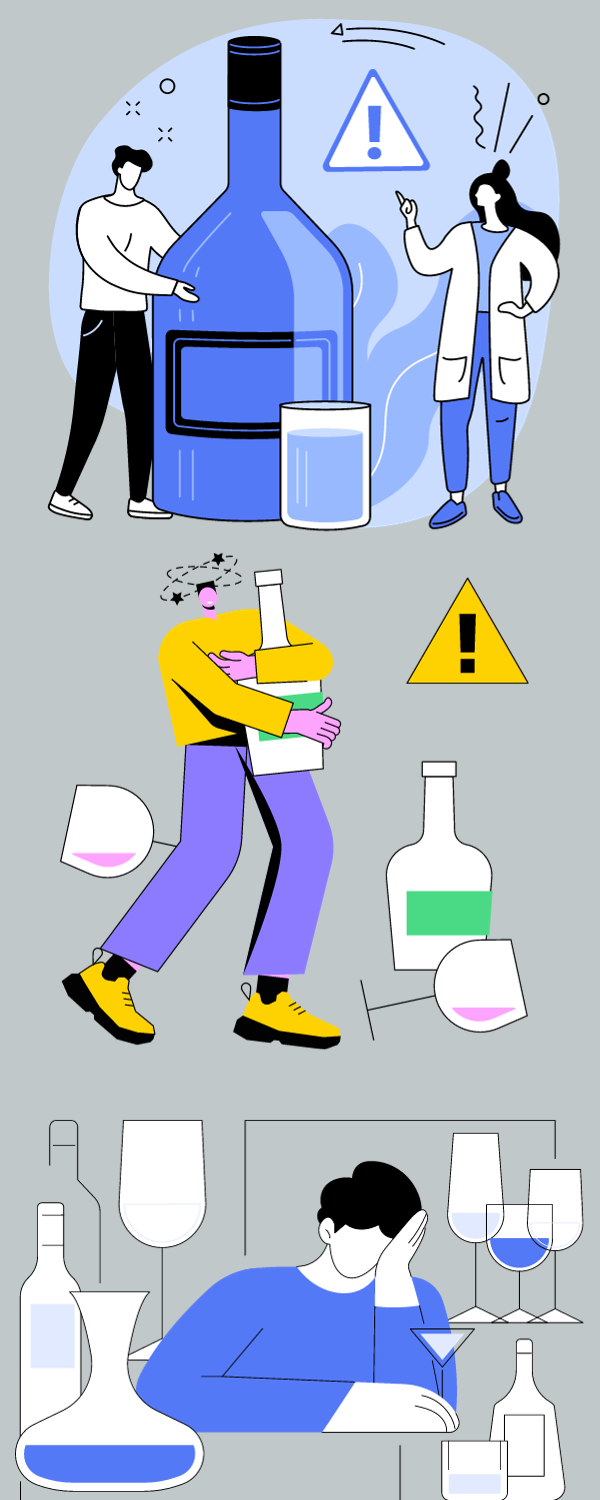
Binge Drinking
The NHS defines binge drinking as ‘drinking heavily over a short space of time’
Binge drinking – having a lot of alcohol in a short space of time – can be extremely dangerous
Know The Risks!
Some of the common risk of drinking too much are;
You may become more vulnerable when you are drunk. The sorts of things that are more likely to happen if you drink a lot in a short space of time include accidents resulting in injury, misjudging risky situations or losing self-control. If you binge drink, you are likely to lose coordination, have impaired judgement and slower reaction times. Serious health risks from binge drinking include breathing problems, seizures, and brain damage. You could also vomit and choke on your own sick. If you are worried about yourself or a friend who is to intoxicate, put them in to the recovery position and call an ambulance.
Effects of Alcohol
When alcohol has been consumed, many people have a head and/or stomate ache, some may throw up, you might feel tired, have flu like symptoms. It will pass in time, but the amount of times depends on how much and what you have drank and how fast your body breaks down the alcohol.
Signs & Symptoms of Alcohol Poisoning
- Confusion
- Hypothermia (the person’s body temperature drops)
- Pale skin.
- The individual is unresponsive but conscious (stupor)
- The individual passes out.
- Abnormal breathing.
- Very slow breathing rate.
- Vomiting
Alcohol & The Law
It is illegal to sell alcohol to anyone under the age of 18 whether it be a shop, pub or club. Most places selling alcohol run a challenge 21 or 25 scheme, meaning that if someone doesn’t look the specific
age they will be asked to show ID. It is illegal for an adult to buy or attempt to buy alcohol for under 18’s. This is called proxy purchasing and a fine up to £5,000 can be received. Drinking in public places can result in being stopped, fined and arrested by the police, even if you are under 18.
For more information about drugs and alcohol please visit DECCA’s website.
Smoking & Vaping
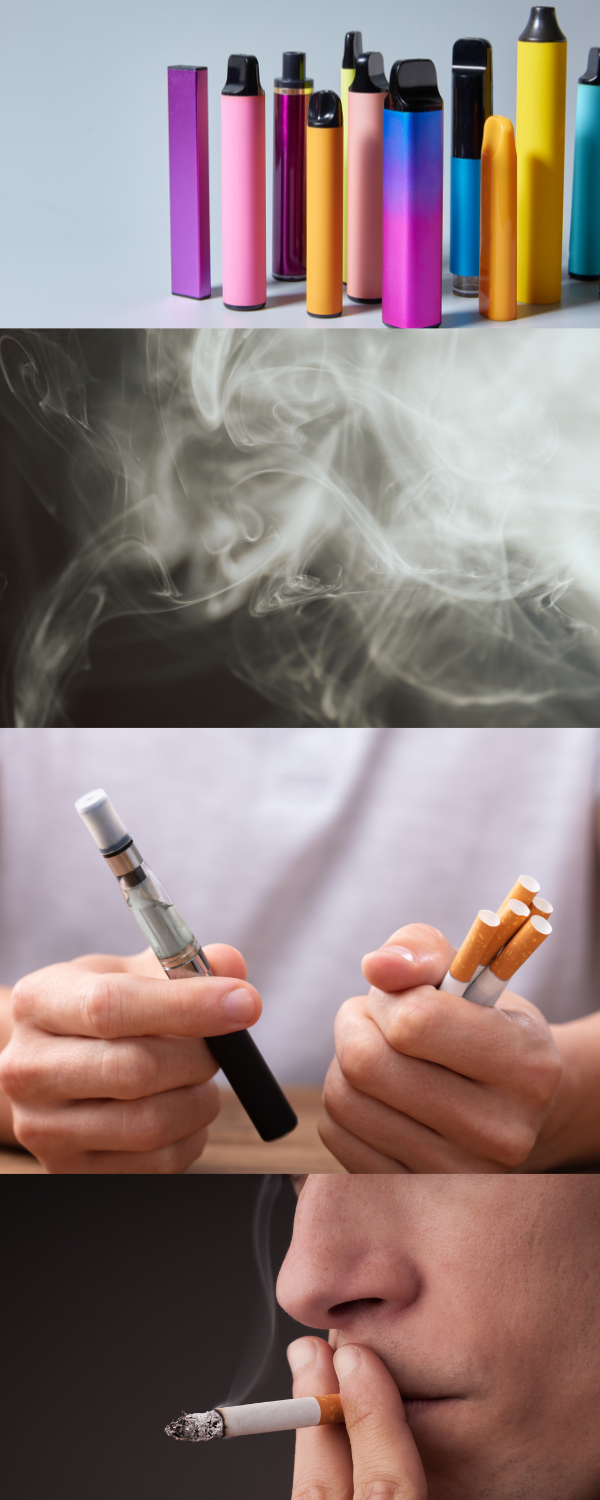
Did you know that there are around 7,000 chemicals in tobacco smoke?! And that’s the regulated products in shops, illegal cigarettes can contain even more dangerous chemicals!
People who smoke illegal cigarettes are putting themselves at more risk of illness. It is illegal to buy cheap cigarettes from other countries and bring them back, to the UK to sell as they don’t follow all the rules and regulations of traditional UK cigarettes. Not only can this result in someone being arrested and/or fined but they are also doing their buyers a lot of harm.
Electronic Nicotine Delivery Systems (ENDS), often known as vapes are battery powered devices that heat up a combination of chemicals, in liquid / oil form, to make a vapour. The e-liquid usually contains 3 main ingredients vegetable glycerine, propylene glycol and nicotine, but it can contain some other pretty nasty ingredients too (some of which are known to be carcinogens (cancer causing chemicals)).
There a several different types of ENDS; disposable e-cigarettes, rechargeable e-cigarettes, tanks and mods. All ENDS devices work in the same way, whether they are rechargeable or not – disposable e-cigarettes just come with a set amount of battery. ENDS can vary in appearance and can look like traditional tobacco products (cigarettes, pipes, cigars etc.) or even household items (pens, highlighters, USB sticks etc.) ENDS were initially marketed as stop smoking aids. However, it is recommended that children, young people, pregnant women and adults who have never used tobacco products before DO NOT use ENDS.
For help to stop smoking please visit our Healthy Sandwell website.
Gambling
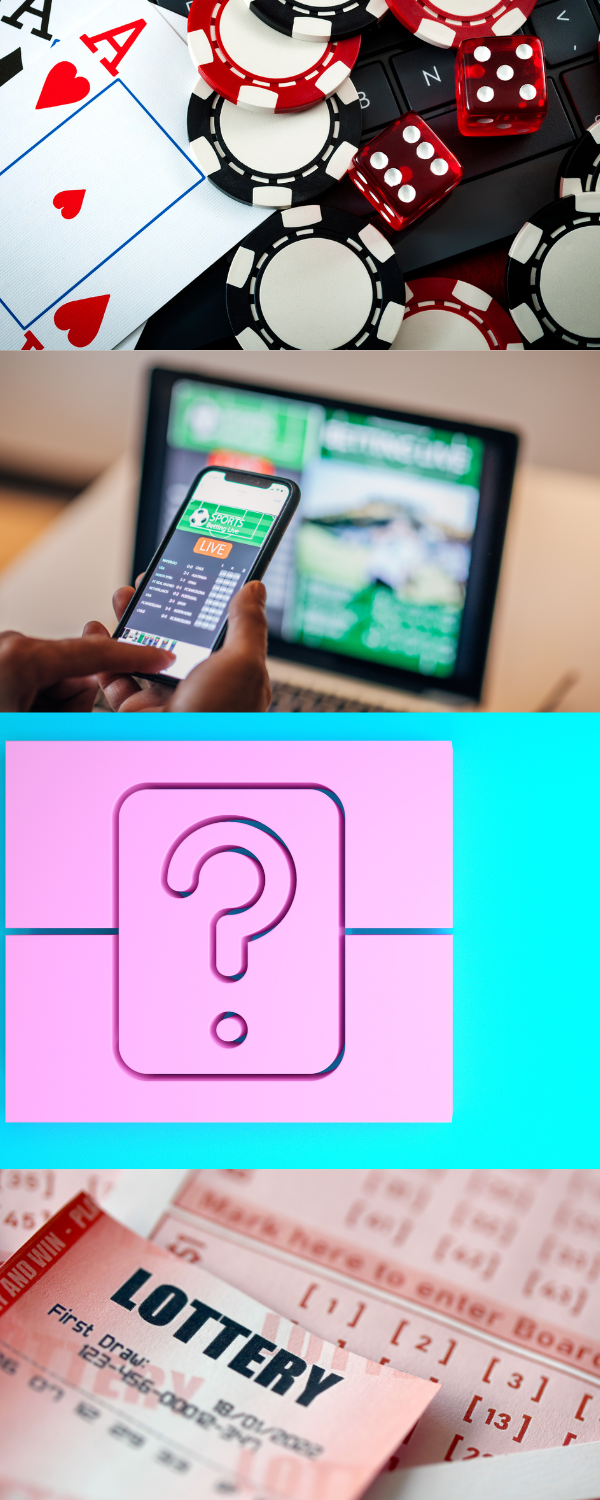
Gambling is when people risk money or anything of value to predict the outcome of a game involving chance, such as on scratchcards or fruit machines, or by betting with friends. If you predict the outcome correctly, you win money. If you’re wrong, you lose the money you gambled. The minimum legal age for gambling in the UK is 18 years old. This applies to online gambling, adult gaming centres, betting shops, bingo halls, casinos and racetracks.
Gambling can stimulate the brain’s reward system much like drugs or alcohol can, leading to addiction. If you have a problem with compulsive gambling, you may continually chase bets that lead to losses, use up savings and create debt. You may hide your behaviour and even turn to theft or fraud to support your addiction.
How to know if you might have a gambling problem
Symptoms
Signs and symptoms of compulsive gambling (gambling disorder) can include:
- Being preoccupied with gambling, such as constantly planning gambling activities and how to get more gambling money
- Needing to gamble with increasing amounts of money to get the same thrill
- Trying to control, cut back or stop gambling, without success
- Feeling restless or irritable when you try to cut down on gambling
- Gambling to escape problems or relieve feelings of helplessness, guilt, anxiety or depression
- Trying to get back lost money by gambling more (chasing losses)
- Lying to family members or others to hide the extent of your gambling
- Risking or losing important relationships, a job, or school or work opportunities because of gambling
- Asking others to bail you out of financial trouble because you gambled money away
Get help or more information about gambling please visit our Healthy Sandwell website.
Useful links to get help & support

- Talk to Frank – FRANK offers friendly, confidential advice on all things drugs-related. You can call them for free on 0300 123 6600
- Young Minds – Advice around drugs and alcohol
- DECCA – Sandwell’s Drug and Alcohol service for young people under 18 years
- National Crime Agency – Information about drug trafficking
- Crime Stoppers – An independent charity giving people the power to speak up to stop crime anonymously
- Be Kind to my Mind – Help with Substance Misuse
- The Mix – Free, confidential support to young people under the age of 25 years
- Drink Aware – Independent alcohol advice to anyone of any age
- Healthy Sandwell – Help with your general health and wellbeing
- Childline – Get help and advice on a wide range of issues. For children and young people aged 18 and under
- We are with you – Free, confidential support to people who are experiencing issues with drugs, alcohol or mental health
- Alateen – For teenage relatives and friends of alcoholics. Part of Al-Anon.
- Alcoholics Anonymous – Offers local support groups for people to share their experiences and solve their problem of alcoholism
- Narcotics Anonymous – Provides information for anyone who needs support and advice about drug addiction


